


Pre Shared Key Vpn Generator
When these passwords are used to generate pre-shared keys for protecting WPA WiFi and VPN networks, the only known attack is the use of 'brute force' — trying every possible password combination. Brute force attackers hope that the network's designer (you) were lazy and used a. IPsec Pre-Shared Key Generator 1) Create a list of at least 10 randomly generated passwords. 2) Over the phone, provide your VPN partner this website address and have them pick one. 3) Give your VPN partner a simple shorter password. 4) Both of you will click the Generate button.
Azure S2S VPN connections provide secure, cross-premises connectivity between customer premises and Azure. This tutorial walks through IPsec S2S VPN connection life cycles such as creating and managing a S2S VPN connection. You learn how to:
Optionally, to make a more variable key, you can enter two encoding keys, and these keys must be exchanged between both parties. For example, you can make the two keys the public IP address of the two VPN terminators. The pre-shared key is a string of printable ASCII characters no longer than 128 in length. This command shows the pre-shared key for the connection: Get-AzVirtualNetworkGatewayConnectionSharedKey ` -Name $Connection1 -ResourceGroupName $RG1. Jan 19, 2006 The pre-shared key to be encrypted can be configured either as standard, under an ISAKMP key ring, in aggressive mode, or as the group password under an EzVPN server or client setup. This sample configuration details how to set up encryption of both existing and new pre-shared keys. Have a site where there was no documentation for the IPSEC vpn and the cloud provider on the other end does not have the IPSEC preshared key and wants a lot of money to reset it if we change it. How can we get this password. If you upgrade FortiAuthenticator from 6.0.x to 6.1.0 with the pre-authentication warning message enabled, you will.
- Create an S2S VPN connection
- Update the connection property: pre-shared key, BGP, IPsec/IKE policy
- Add more VPN connections
- Delete a VPN connection
The following diagram shows the topology for this tutorial:
Working with Azure Cloud Shell and Azure PowerShell
This article uses PowerShell cmdlets. To run the cmdlets, you can use Azure Cloud Shell. The Azure Cloud Shell is a free interactive shell that you can use to run the steps in this article. It has common Azure tools preinstalled and configured to use with your account.
To open the Cloud Shell, just select Try it from the upper right corner of a code block. You can also launch Cloud Shell in a separate browser tab by going to https://shell.azure.com/powershell. Select Copy to copy the blocks of code, paste it into the Cloud Shell, and press enter to run it.
Requirements
Complete the first tutorial: Create VPN gateway with Azure PowerShell to create the following resources:
Pre Shared Key Vpn Generator Download
- Resource group (TestRG1), virtual network (VNet1), and the GatewaySubnet
- VPN gateway (VNet1GW)
The virtual network parameter values are listed below. Note the additional values for the local network gateway which represent your on-premises network. Change the values below based on your environment and network setup, then copy and paste to set the variables for this tutorial. If your Cloud Shell session times out, or you need to use a different PowerShell window, copy and paste the variables to your new session and continue the tutorial.
Note
If you are using this to make a connection, be sure to change the values to match your on-premises network. If you are just running these steps as a tutorial, you don't need to make changes, but the connection will not work.
The workflow to create an S2S VPN connection is straightforward:
- Create a local network gateway to represent your on-premises network
- Create a connection between your Azure VPN gateway and the local network gateway
Create a local network gateway
A local network gateway represents your on-premises network. You can specify the properties of your on-premises network in the local network gateway, including:
- Public IP address of your VPN device
- On-premises address space
- (Optional) BGP attributes (BGP peer IP address and AS number)
Create a local network gateway with the New-AzLocalNetworkGateway command.
Create a S2S VPN connection
Next, create a Site-to-Site VPN connection between your virtual network gateway and your VPN device with the New-AzVirtualNetworkGatewayConnection. Notice that the '-ConnectionType' for Site-to-Site VPN is IPsec.
Add the optional '-EnableBGP $True' property to enable BGP for the connection if you are using BGP. It is disabled by default. Parameter '-ConnectionProtocol' is optional with IKEv2 as default. You can create the connection with IKEv1 protocols by specifying -ConnectionProtocol IKEv1.
Update the VPN connection pre-shared key, BGP, and IPsec/IKE policy
View and update your pre-shared key
Pre Shared Key Vpn Generator Download
Azure S2S VPN connection uses a pre-shared key (secret) to authenticate between your on-premises VPN device and the Azure VPN gateway. You can view and update the pre-shared key for a connection with Get-AzVirtualNetworkGatewayConnectionSharedKey and Set-AzVirtualNetworkGatewayConnectionSharedKey.
Important
The pre-shared key is a string of printable ASCII characters no longer than 128 in length.
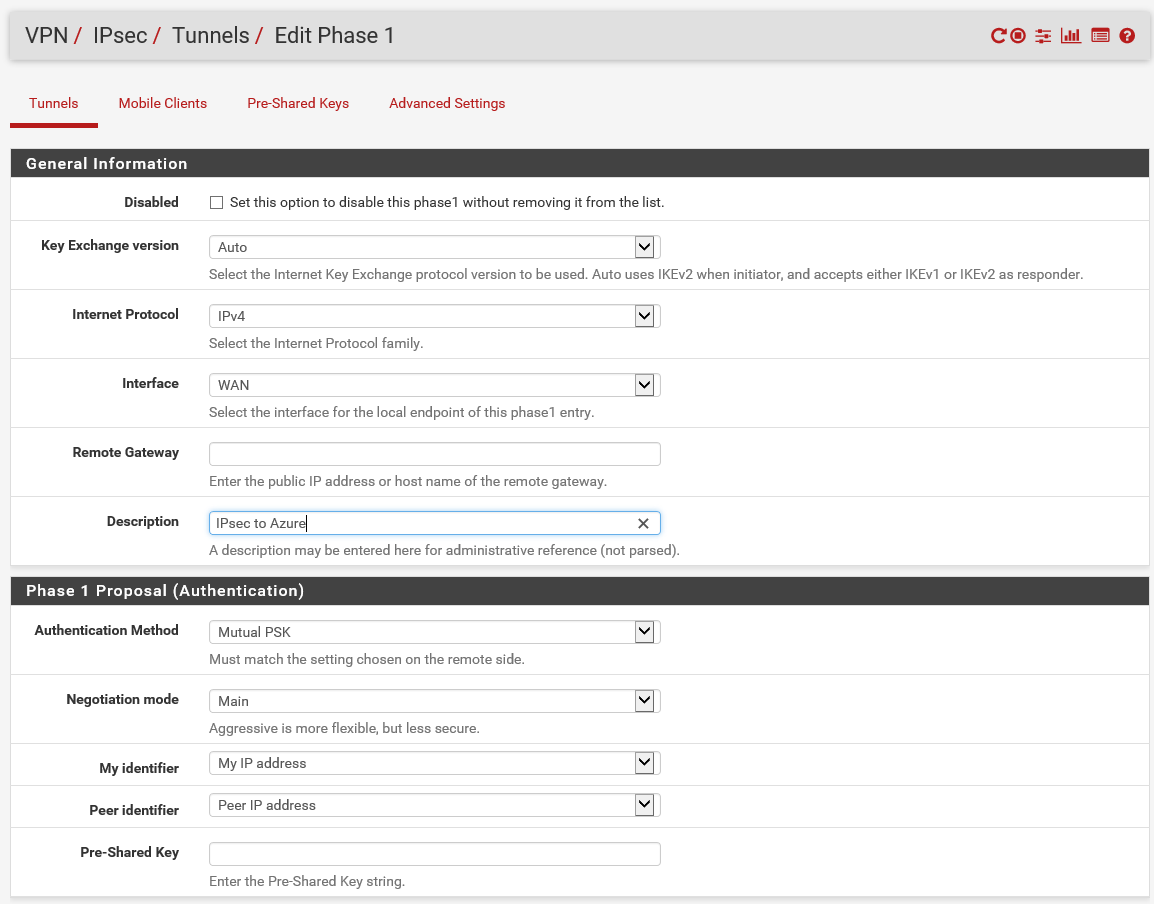
This command shows the pre-shared key for the connection:
The output will be 'Azure@!b2C3' following the example above. Use the command below to change the pre-shared key value to 'Azure@!_b2=C3':
Dragon Ball Xenoverse Key Generator. ✓ Over 5 000 000 working keys. ✓ Can be handled by everyone. ✓ This tool works for both PC type bits: 32-Bit or 64-Bit. ✓ The game have no bugs because it’s original game. ✓ Dragon Ball Xenoverse Key Generator works for all platforms. License key generator. Feb 23, 2015 Dragon Ball XenoVerse Key Generator Informations: This Dragon Ball XenoVerse Key Generator was developed by “freegametools” team. This generator is very easy to use. With it you can generate keys for Dragon Ball XV on PS3/4, Xbox360/One and Microsoft Windows. Dragon Ball XenoVerse Key Generator is developed with “KGN Engine” which gives auto updater and real-time-key-generation. The graphics of the spunky hire the cel-shading technology, which gives it a typical amusing style. Dragon Ball: Xenoverse marks the debut of the series on eighth-generation consoles, which obviously has influenced the ocular experience. Mar 06, 2015 Hello cdkeyforgames Users!Today we present you our new key generator tool. We are sure that this hack tool will help you a lot. Today we released the new Dragon Ball Xenoverse Key Generator for those who want to play this new title for free. Dragon Ball Xenoverse Key Generator will give you the power to generate a legit key for Dragon Ball Xenoverse. Mar 09, 2015 We provide to you the new and upgraded Dragon Sphere: Xenoverse Key Generator Tool.The Key Generator is easy, 100% safe and clean, virus free, works efficiently without any problems at all, upgraded weekly, all the codes stand and special Generate 100% working and legitimate cd-keys.
Enable BGP on VPN connection
Azure VPN gateway supports BGP dynamic routing protocol. You can enable BGP on each individual connection, depending on whether you are using BGP in your on-premises networks and devices. Specify the following BGP properties before enabling BGP on the connection:
- Azure VPN ASN (Autonomous System Number)
- On-premises local network gateway ASN
- On-premises local network gateway BGP peer IP address
If you have not configured the BGP properties, the following commands add these properties to your VPN gateway and local network gateway: Set-AzVirtualNetworkGateway and Set-AzLocalNetworkGateway.
Use the following example to configure BGP properties:
Enable BGP with Set-AzVirtualNetworkGatewayConnection.
You can disable BGP by changing the '-EnableBGP' property value to $False. Refer to BGP on Azure VPN gateways for more detailed explanations of BGP on Azure VPN gateways.
Apply a custom IPsec/IKE policy on the connection
You can apply an optional IPsec/IKE policy to specify the exact combination of IPsec/IKE cryptographic algorithms and key strengths on the connection, instead of using the default proposals. The following sample script creates a different IPsec/IKE policy with the following algorithms and parameters:
- IKEv2: AES256, SHA256, DHGroup14
- IPsec: AES128, SHA1, PFS14, SA Lifetime 14,400 seconds & 102,400,000 KB
Refer to IPsec/IKE policy for S2S or VNet-to-VNet connections for a complete list of algorithms and instructions.
Add another S2S VPN connection
Add an additional S2S VPN connection to the same VPN gateway, create another local network gateway, and create a new connection between the new local network gateway and the VPN gateway. Use the following examples, making sure to modify the variables to reflect your own network configuration.
There are now two S2S VPN connections to your Azure VPN gateway.
Delete a S2S VPN connection
Delete a S2S VPN connection with Remove-AzVirtualNetworkGatewayConnection.
Delete the local network gateway if you no longer need it. You cannot delete a local network gateway if there are other connections associated with it.
Clean up resources
If this configuration is part of a prototype, test, or proof-of-concept deployment, you can use the Remove-AzResourceGroup command to remove the resource group, the VPN gateway, and all related resources.
Next steps
In this tutorial, you learned about creating and managing S2S VPN connections such as how to:
- Create an S2S VPN connection
- Update the connection property: pre-shared key, BGP, IPsec/IKE policy
- Add more VPN connections
- Delete a VPN connection
Advance to the following tutorials to learn about S2S, VNet-to-VNet, and P2S connections.
In cryptography, a pre-shared key (PSK) is a shared secret which was previously shared between the two parties using some secure channel before it needs to be used.[1]
Key[edit]
To build a key from shared secret, the key derivation function is typically used. Such systems almost always use symmetric key cryptographic algorithms. The term PSK is used in Wi-Fi encryption such as Wired Equivalent Privacy (WEP), Wi-Fi Protected Access (WPA), where the method is called WPA-PSK or WPA2-PSK, and also in the Extensible Authentication Protocol (EAP), where it is known as EAP-PSK. In all these cases, both the wireless access points (AP) and all clients share the same key.[2]
The characteristics of this secret or key are determined by the system which uses it; some system designs require that such keys be in a particular format. It can be a password, a passphrase, or a hexadecimal string. The secret is used by all systems involved in the cryptographic processes used to secure the traffic between the systems.
Crypto systems rely on one or more keys for confidentiality. One particular attack is always possible against keys, the brute force key space search attack. A sufficiently long, randomly chosen, key can resist any practical brute force attack, though not in principle if an attacker has sufficient computational power (see password strength and password cracking for more discussion). Unavoidably, however, pre-shared keys are held by both parties to the communication, and so can be compromised at one end, without the knowledge of anyone at the other. There are several tools available to help one choose strong passwords, though doing so over any network connection is inherently unsafe as one cannot in general know who, if anyone, may be eavesdropping on the interaction. Choosing keys used by cryptographic algorithms is somewhat different in that any pattern whatsoever should be avoided, as any such pattern may provide an attacker with a lower effort attack than brute force search. This implies random key choice to force attackers to spend as much effort as possible; this is very difficult in principle and in practice as well. As a general rule, any software except a cryptographically secure pseudorandom number generator (CSPRNG) should be avoided.
See also[edit]
- Transport Layer Security pre-shared key ciphersuites (TLS-PSK)
References[edit]
- ^Martin, Victoria. 'pre-shared key'. Fortinet Cookbook. Retrieved 2019-03-21.
- ^'What is a pre-shared key or shared secret?'. Indiana University. 2018-01-18. Retrieved 2019-03-21.